Naperville Property Taxes: DuPage County vs. Will County Guide

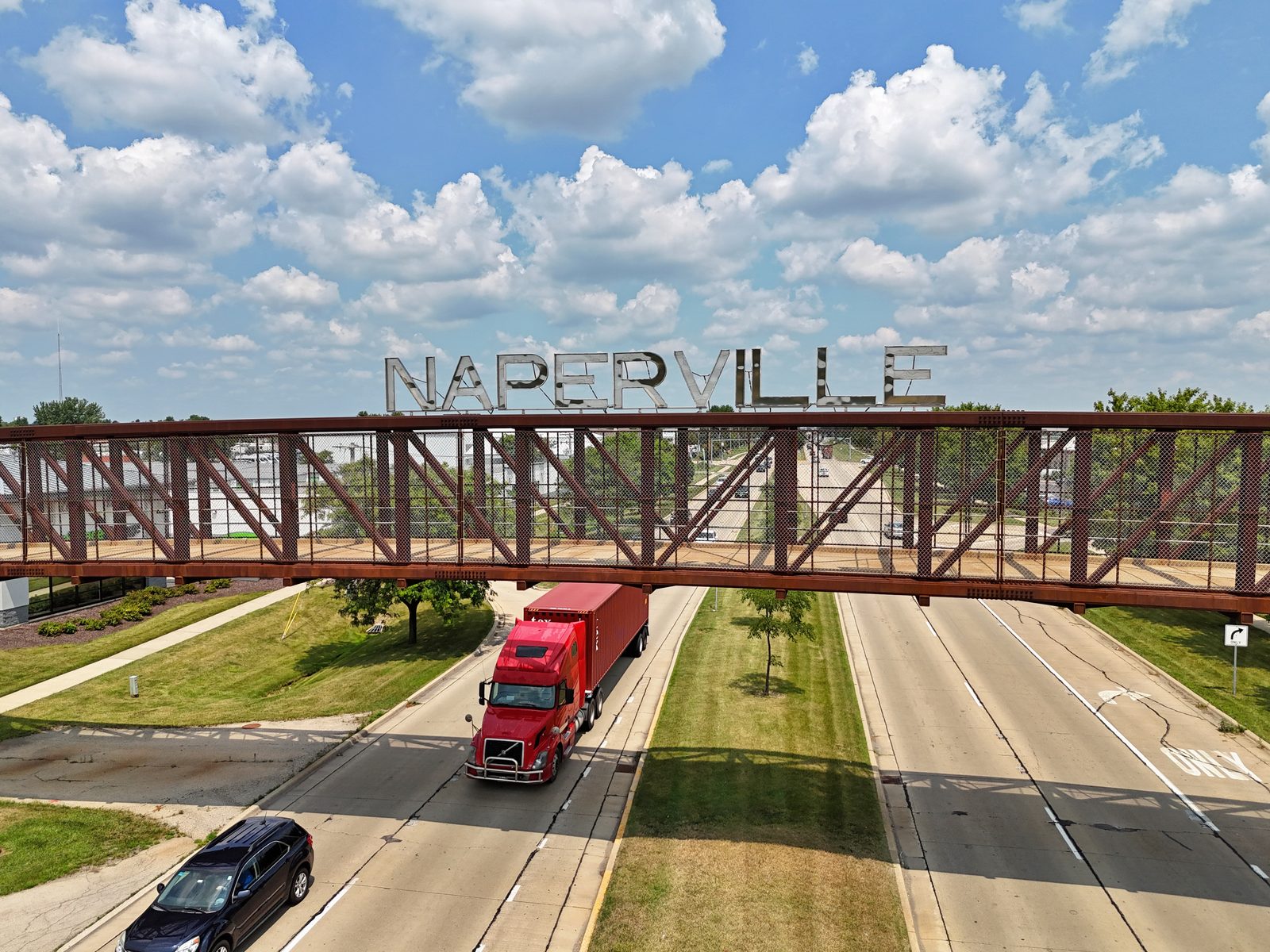
Naperville bridge and welcome sign over the waterway (Photo credit: CommunityClips / Dan Firks Team Archives)
Naperville is split between two counties: DuPage to the north and central, and Will to the south. While Will County tax bills often show a slightly higher composite rate due to newer school district capital construction bonds in District 204, home prices in South Naperville often offer newer construction and larger square footage for the same budget, balancing your monthly payment.
- •DuPage County effective property tax rate averages 2.05% to 2.25% across Lisle, Naperville, and Winfield townships.
- •Will County effective property tax rate averages 2.25% to 2.58% across Wheatland and DuPage townships.
- •School districts represent 72% to 75% of your entire property tax bill in both counties.
- •General Homestead Exemptions and Senior Citizen Assessment Freezes apply across both jurisdictions with county-specific filing deadlines.
The Geographic Divide: DuPage County vs. Will County
Naperville is one of the few prominent cities in Illinois that spans two distinct county governments. Generally, properties north of 87th Street fall within DuPage County, while neighborhoods south of 87th Street or along the 95th Street commercial corridor fall into Will County.
When prospective home buyers search Naperville real estate, property tax rates frequently spark confusion. Buyers notice two homes with identical $700,000 asking prices: one carrying a $14,800 tax bill in DuPage, and another carrying a $16,500 tax bill in Will County.
Understanding why this differential exists is essential for making an informed long-term relocation choice.
Where Your Tax Dollars Go: Breakdown of Taxing Bodies
A common misunderstanding is that the City of Naperville municipal government consumes the lion's share of property taxes. In reality, the municipal government accounts for less than 10% of your total property tax bill.
The vast majority of property tax revenue goes toward your local school district: Naperville Community Unit School District 203 or Indian Prairie School District 204. District 204, which covers much of Will County Naperville as well as parts of Aurora and Plainfield, was built out rapidly during the 1990s and 2000s, incurring capital facility bonds to build modern high schools such as Neuqua Valley and Metea Valley.
As these school building bonds mature and retire over the coming decade, the tax rate differential between the two counties continues to narrow.
| Township / County | Primary High School | Composite Tax Rate | Estimated Annual Tax | Key Tax Advantage |
|---|---|---|---|---|
| Naperville Township (DuPage) | Naperville Central / North | 6.72% (Equalized) | $13,850 | Mature bond debt, historic downtown walkability |
| Lisle Township (DuPage) | Naperville North | 6.85% (Equalized) | $14,100 | Proximity to I-88 corporate corridor & train |
| Wheatland Township (Will) | Neuqua Valley / Waubonsie | 7.45% (Equalized) | $15,400 | Newer homes, larger lot sizes, resort pools |
| DuPage Township (Will) | Metea / Waubonsie Valley | 7.52% (Equalized) | $15,650 | Modern construction, 95th St library access |
Homeowner Exemptions and Appealing Your Assessment
Every owner-occupied primary residence in Naperville qualifies for the General Homestead Exemption, which deducts equalized assessed value prior to computing your tax liability. Senior citizens aged 65 and older qualify for the Senior Citizen Homestead Exemption as well as the Senior Assessment Freeze.
Property taxes in Illinois can be formally appealed each year following the publication of assessment rolls. Dan Firks and Chris Salas frequently connect clients with trusted local real estate tax attorneys who appeal assessments on a contingency basis, ensuring homeowners never pay more than their fair share.
Frequently Asked Questions
Q:Is it cheaper to buy in DuPage County or Will County Naperville?
DuPage County has slightly lower annual property taxes, but Will County homes generally offer newer construction, larger square footage, and bigger yards for the same purchase price.
Q:Can I appeal my property taxes in Naperville?
Yes. Property owners have 30 days following the publication of their township assessment roll each summer or fall to file an appeal with the County Board of Review.
Q:Do seniors get a property tax break in Naperville?
Yes. Qualifying seniors aged 65 and older can apply for the Senior Homestead Exemption and the Senior Freeze Exemption, which freezes the taxable assessed value of the home.
Thinking About a Move to Naperville?
Dan Firks and Chris Salas provide confidential real estate advisory, school boundary verification, and private home tours across Naperville. Over 25 years and $800M+ in residential sales.
Explore Related Naperville Guides
Chicago vs. Naperville Cost of Living: Complete Financial Breakdown
A complete line by line financial comparison of living in Chicago versus Naperville, Illinois. Analyze property taxes, housing, Metra fares, and school tuition savings.
South Naperville Subdivisions: Complete Neighborhood Guide
Explore South Naperville premier master-planned subdivisions. Compare HOA amenities, swim clubs, Neuqua Valley high school feeders, and home values.
Naperville School District 203 vs. District 204: Complete Boundary Guide
Detailed comparison of Naperville School District 203 and Indian Prairie District 204. Review test scores, high school feeder patterns, and neighborhood boundaries.
Retiring in Naperville: 55+ Communities and Active Adult Living
Explore 55+ active adult communities and single-story living in Naperville, IL. Review Carillon Club amenities, maintenance-free villas, and healthcare proximity.